Amazon Global Selling
Amazon Global Selling
Reach hundreds of millions of customers
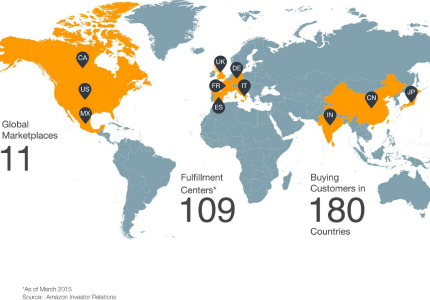
Sign up and reach our loyal customer base around the world in over 180 countries.
Increase sales from festival demands
Now you can make the most of peak selling seasons like - Christmas, Black Friday.
Export products easily
Store, pack, ship and provide customer service for your products.
Earn in Dollars, Pounds and Euros. Get paid in INR
From currency conversion to deposits into your bank account, we’ll ensure that you get secure payments.
3 simple steps to getting started
Register your global Amazon account
Provide your product details
Start selling internationally
European Tax Considerations
There’s no doubt you’ve heard of VAT, or Value Added Tax. It’s both a blessing and a boon, for it centralises everything into one account — but is fairly steep with the figure being at least 15%. This figure is tacked on as a percentage of the price of the goods, and varies from country to country.
How it works is like this: you have to register yourself as a VAT trader so you can get a VAT number, and then you have to show the VAT number on all invoices so your customers can see how much of the final price is because of tax. In return, you’ll know exactly how much money you need to be passing on to tax authorities.
It’s important to keep in mind that VAT numbers differ across European countries, even if you’re an FBA seller. If you’re selling in multiple countries, get a VAT number for each country so you can properly pay the tax each time. As well, if you’re importing into the European Union, then you might have to pay VAT as soon as your items cross the border, as well as the country they’re headed to. But if you’re selling on the European Amazon site to someone who doesn’t live in the EU, you may not have to pay the VAT.
American Tax Considerations
The Internal Revenue Service (IRS) is the regulatory body in the United States that you’ll need to deal with.
As an American Amazon seller — you have to file a Form 1099-K if you’ve both made more than 200 transactions, and made more than $20,000 in unadjusted gross sales (in a calendar year).
If you’re not an American Amazon seller but are selling on the American Amazon site, then the form you have to fill out is called a Form W-8BEN. This will exempt you from U.S. tax reporting requirements, but only if you’re either a professional seller or are an individual seller with more than 50 transactions in a calendar year.
Canadian Tax Considerations
Canada Revenue on the surface seems a little less complicated than the IRS, as there are no forms to fill out, regardless of whether you’re a Canadian Amazon seller or selling on Amazon Canada. However, that doesn’t exempt you from taxes, as you’re still responsible for destination duties, taxes and custom clearance fees, and it’s on you to do this.
If you’re not Canadian, you’re going to have to become what’s called a Non-Resident Importer so you can import products into Canada under your own name and business number. You’ll get a business number that has 15 digits, with the first nine identifying your business and the last four digits — two numbers and two letters — showing your program and account.
Make sure you get your business number before you start doing business!
Once you’re good to go, get ready to start paying 5% for most of your imports plus duty if need be. A bit of bad news: if it turns out you have to add duty, get ready to pay tax on that duty. And a spot more bad news: some provinces will require you to pay a Goods and Service Tax (GST) or Harmonised Sales Tax (HST). It’s not fun, but at least Canada Revenue doesn’t charge you to register for GST/HST.
Japanese Tax Considerations
Whether you’re a Japanese citizen or not, you have to abide by all Japanese customs laws and regulations, such as paying the Import Consumption Tax. You may also have to pay customs duties, which depend on what the harmonised classification schedule in the Customs Tariff Law describes.
The amount you’ll have to pay depends on the customs value of the goods, customs duty payable (if need be), and other excise taxes payables. And, if you’re selling things like liquor, tobacco products, petroleum, and liquefied petroleum, then you may have to face even more excise taxes on top of that. If that’s the case, then the amount you’ll have to pay depends on how much you’re importing.
Professional Advice
Educating yourself about your tax responsibilities when selling globally is a good first start to ensuring you remain compliant, but the truth is, tax is a complicated issue when selling beyond your domestic market.
Luckily, there are experts who specialise in such matters.